概述
FSDP2 与FSDP1 保持了相同的并行思路,将参数、梯度等分块,在需要时all-gather聚集到一起,用完即刻丢弃。通过forward 和 backward hook自动处理相应的shard和unshard操作,节省显存,同时通过prefetch进一步掩盖通信和计算的耗时,提升性能。但是FSDP2和FSDP1也存在一些diff,甚至接口也不再向后兼容。
FSDP2梳理及更新点
官方的描述是这样的:
Comparing with FSDP1, FSDP2 has following advantages: Representing sharded parameters as DTensor sharded on dim-i, allowing for easy manipulation of individual parameters, communication-free sharded state dicts, and a simpler meta-device initialization flow. Improving memory management system that achieves lower and deterministic GPU memory by avoiding recordStream (doc) and does so without any CPU synchronization. Offering a tensor subclass extension point to customize the all-gather, e.g. for float8 all-gather for float8 linears (doc), and NF4 for QLoRA (doc) Mixing frozen and non-frozen parameters can in the same communication group without using extra memory. 主要梳理下DTensor以及recordStream相关的改动。
API接口
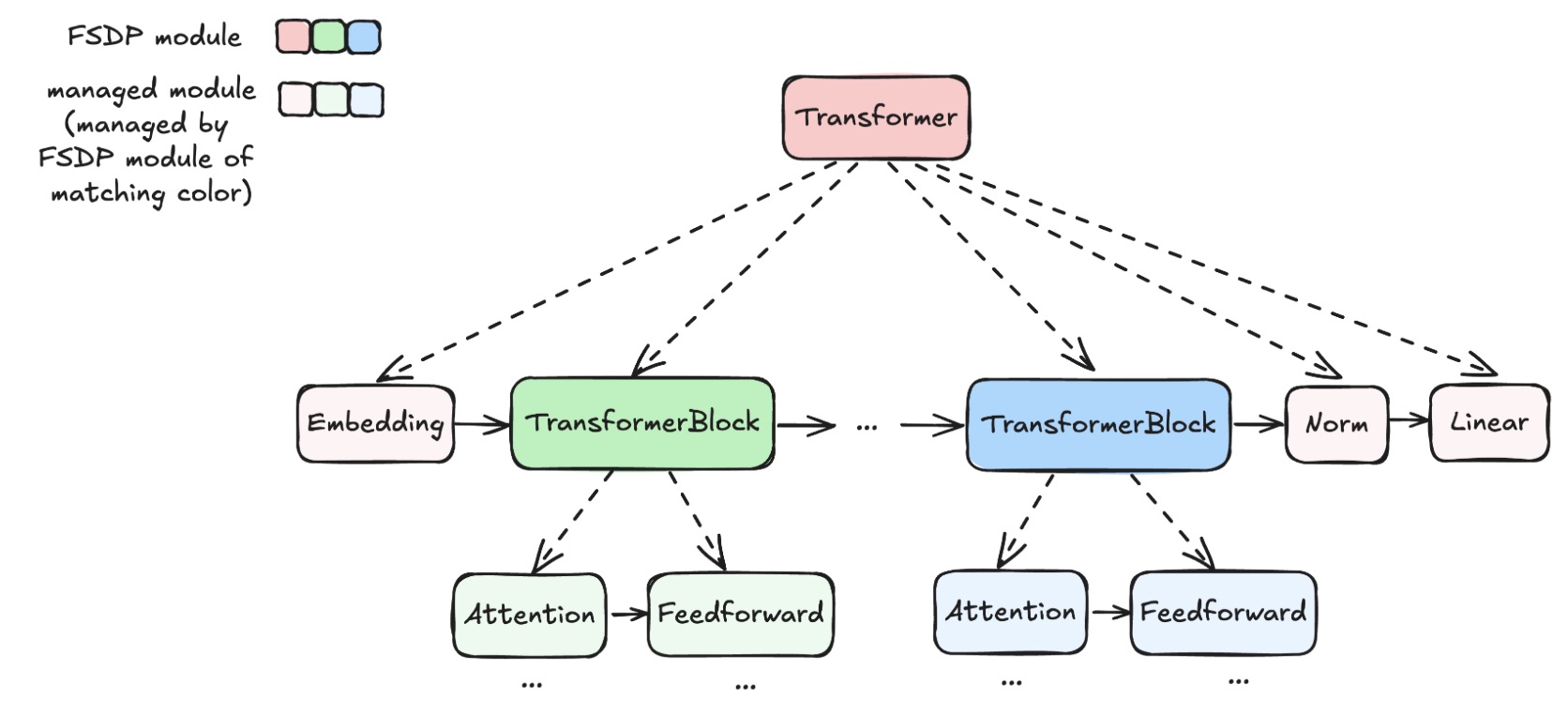
FSDP2的接口不是向后兼容的,相应的接口名称也从FSDP变成了fully_shard,以一个model为例,不再像FSDP1一样可以直接通过一个接口包裹整个模型,而转变成逐层进行模型的包裹。
for module in model.modules();
  if isinstance(module, TransformerBlock):
    fully_shard(module, **fsdp_kwargs)
fully_shard(model, **fsdp_kwargs)
原因是在FSDP2中,unit变成了最小的处理单位,unit可以是一个layer,一个nnModule,也可以是一整个模型,分块能更合理地去管理每个分块参数的生命周期。如图所示,每个颜色代表一个unit的参数。
相比之下,FSDP1的处理方式为:
from torch.distributed.fsdp import FullyShardedDataParallel as FSDP
# defnition of model
......
model = FSDP(model)
分布式与DTensor
Representing sharded parameters as DTensor sharded on dim-i, allowing for easy manipulation of individual parameters, communication-free sharded state dicts, and a simpler meta-device initialization flow.
DTensor是pytorch的一种分布式数据结构,是torch.Tensor的子类。DTensor通过Devicemesh描述了张量在哪个设备上,以什么划分方式分布。Placement参数描述了每个参数上的储存方式。FSDP2使用了DTensor作为参数的分布式表达,每个rank只持有完整Tensor的局部shard。 DTensor相关介绍见专栏文章 PyTorch DTensor 功能及原理源码解读 DTensor取代的是FSDP1 使用的FlatParameter参数切割方式,会把所有要分块的参数拼接成一个巨大的Tensor,根据要分块的大小对参数进行padding,之后按大小分配给各个rank,同时,梯度也会随参数切分而切分。
To shard the FlatParameter, FSDP divides it into equal-sized chunks, where the number of chunks equals the sharding factor, and assigns one chunk per rank.
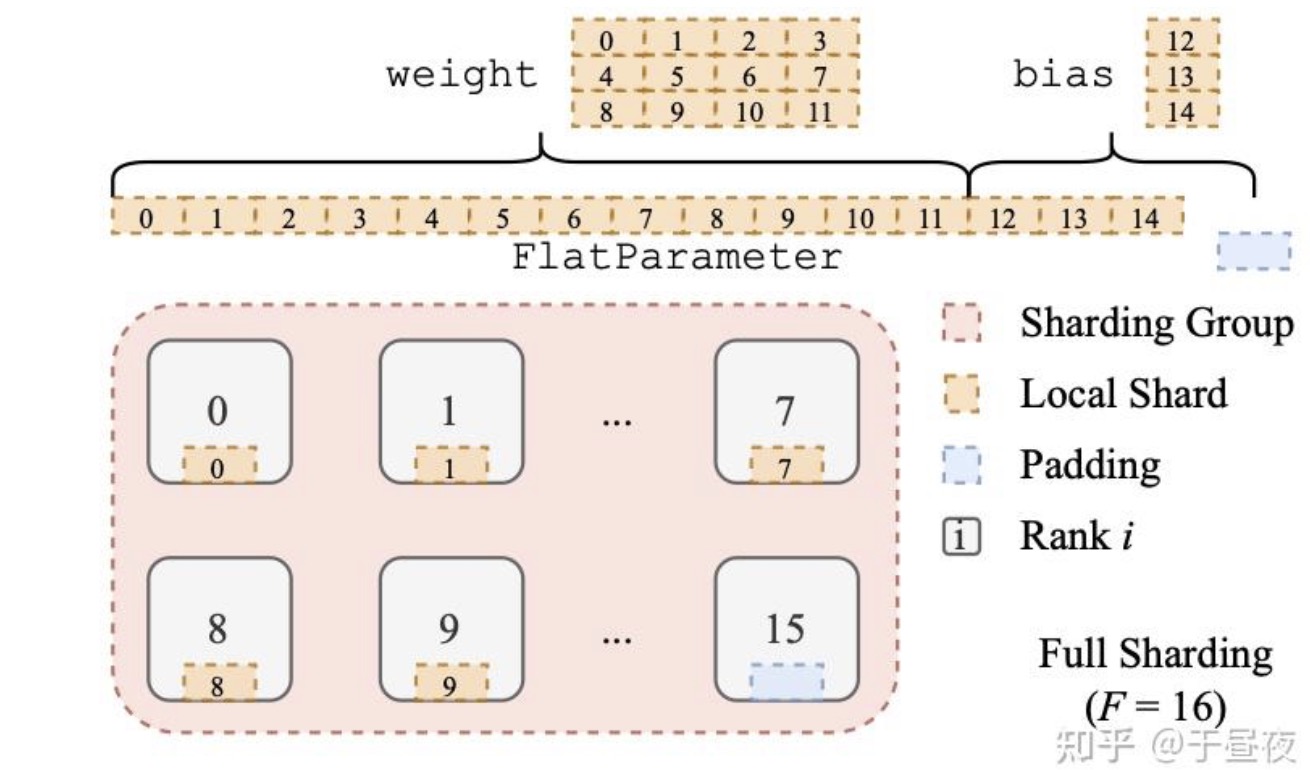
FSDP1 FlatParam
FSDP的FlatParam分块导致某些Tensor可能会被划分到不同的rank,而某些Tensor完整的保留在某些rank中。基于DTensor的切分方式通常是沿Dim0切分,FSDP2采用这种切分方式保证每个rank都获得每个param的一部分参数,并且只需要对部份Tensor进行padding。
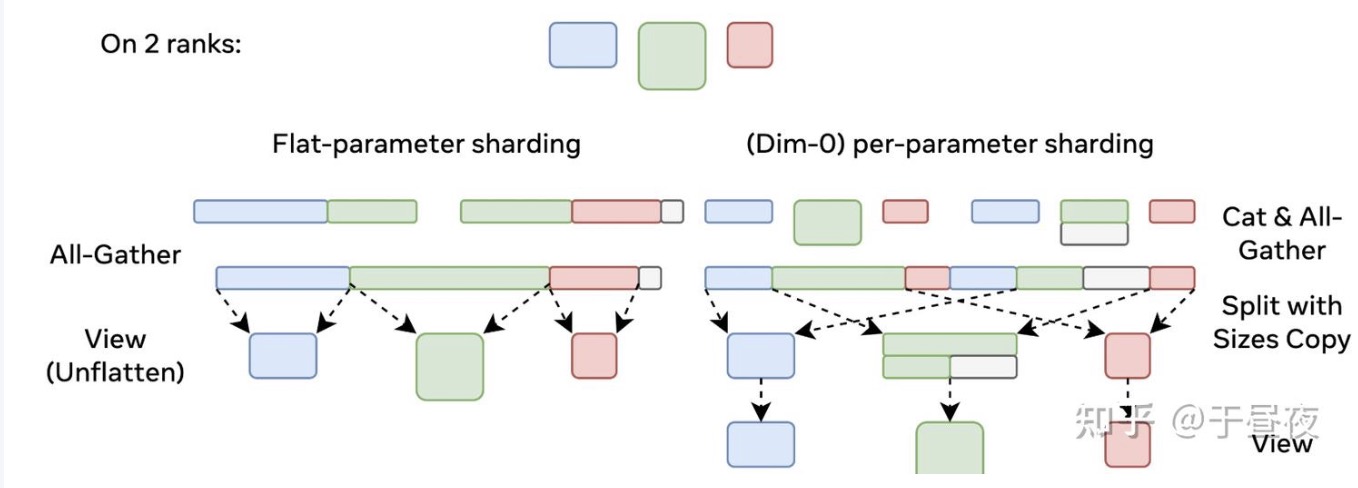
经过FSDP2的init_device_mesh,生成分布式的分块信息。DTensor在进行sharding操作时会保留这些分块信息,FSDP2中,在FSDPParam中进行维护。在进行通信操作,如All-reduce或reduce-scatter时,DTensor中储存的分块信息会被读取,以完成参数的shard和unshard操作。 打印fsdp前后的参数信息,可以得知sharding前grad属于<class ’torch.Tensor’>,而sharding后转变成了<class ’torch.distributed.tensor.Tensor’> Stream、Event控制
Improving memory management system that achieves lower and deterministic GPU memory by avoiding recordStream (doc) and does so without any CPU synchronization. 通过避免recordStream,无需CPU同步降低了GPU显存占用
recordStream是torch用来管理CUDA张量生命周期的方法,因为GPU的操作是异步的,比如下发一个计算或者通信算子时,CPU操作会立即返回,而实际的数据计算或者通信仍然在GPU上进行,那么此时如果尝试读写这块正在操作的buffer,就有可能导致一些不可预知的错误。
CUDA tensor的生命周期是由GPU上内存的分配合释放管理的,recordStream会记录tensor被哪些流绑定,如果要释放一个tensor,就必须保证依赖该tensor的流全部执行完毕,而不是仅与操作它的流相关。
FSDP1的局限性: FSDP1的prefetch实现了在计算当前层参数时,预取下一层参数,以实现通信/计算的overlap,但是通常计算流和通信流是两条stream,且不同stream间是相互并行的。因此,存在一种情况:即如果某次计算由于耗时较久,久到连续下发的几个all-gather操作全部完成了,计算还没有完成,此时显存就会被通信后的参数不断占据,甚至会出现oom。
FSDP1对这个问题的解法也十分粗暴,即,设置了一个rate_limiter,即速率控制器,在每个TransformerBlock后阻塞CPU,rate_limiter中的限制默认为2,保证只有当上一层结束时,才会对下一层进行all-gather操作。 源码:
class _FreeEventQueue:
    """
    This tracks all pending frees corresponding to inflight all-gathers. The
    queueing pattern is iterative enqueues with a single dequeue per iteration
    once the limit ``_max_num_inflight_all_gathers`` is reached.
    """

    def __init__(self) -> None:
        self._queue: collections.deque[torch.Event] = collections.deque()
        self._max_num_inflight_all_gathers = 2  # empirically chosen
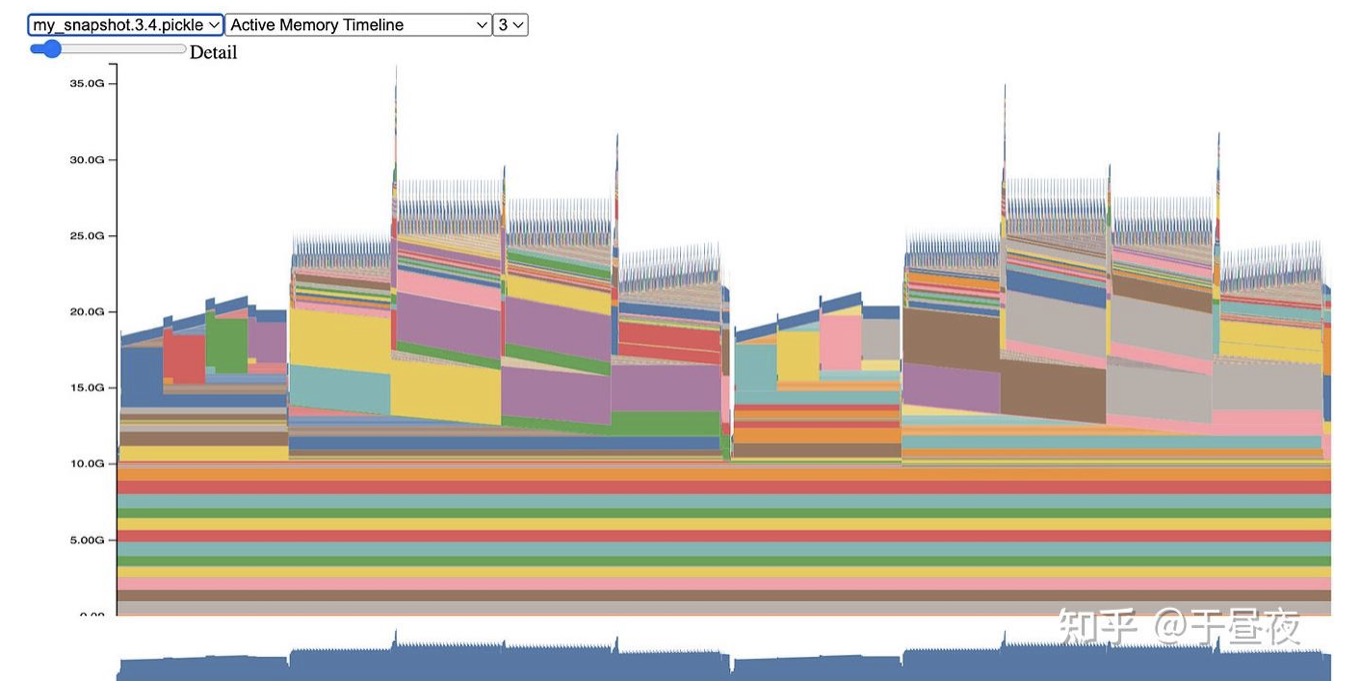
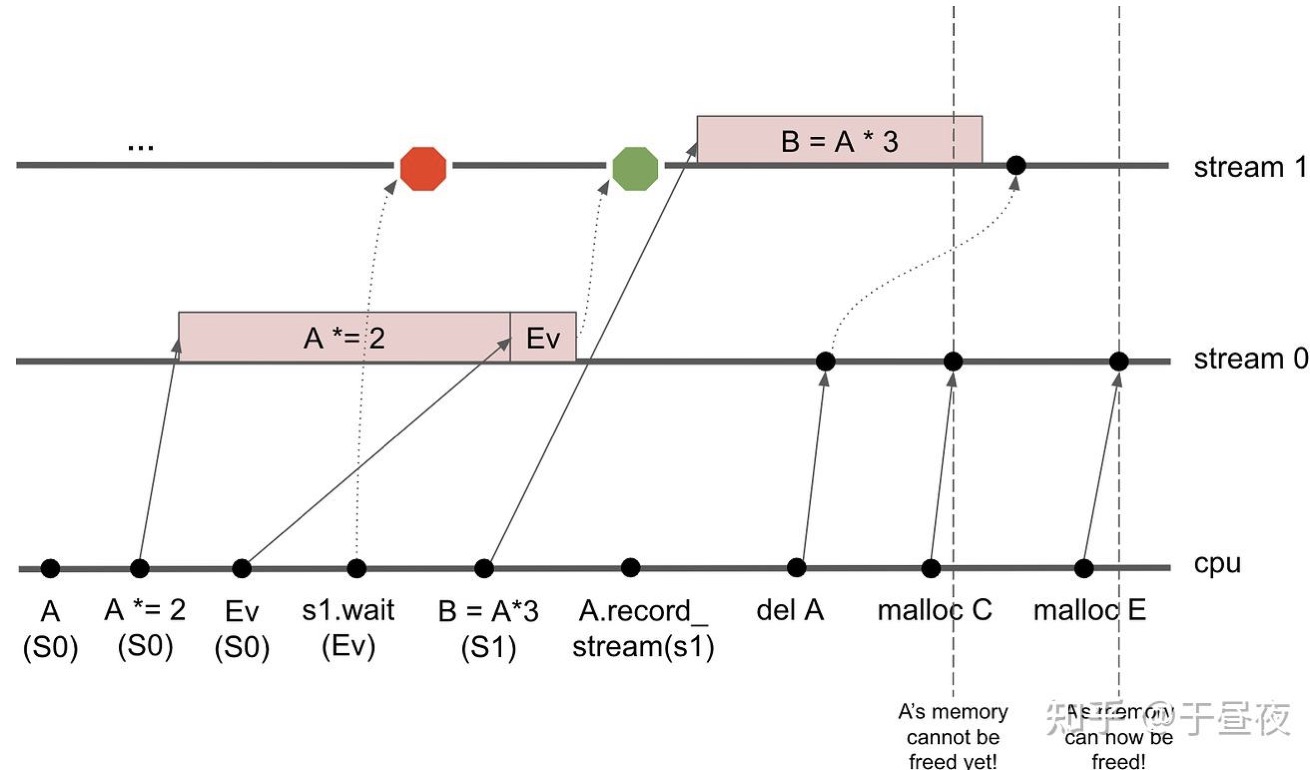
关于FSDP1还有一个讨论,通过recordStream控制,假设存在两个流streamA和streamB,当streamA持有某个Tensor时,直到这条steamA 完全结束时,相应的Tensor才会被释放,因此,即使这个Tensor生命周期理论已经结束了,但streamA没有退出,此时如果在streamB上尝试malloc一块内存,cachingAllocator会判断此时没有空闲内存,而去重新分配空间。这就导致了1. 内存存在峰值 2. 由于反复malloc,性能变差。社区讨论的内存峰值如图:
基本原理如图所示:当在尝试del一个正在使用的tensor后,如果使用过该tensor的流还未结束,那么此时的malloc操作无法复用内存,如图上的malloc C,如果在流结束之后,如malloc E,才可以顺利复用A的内存。
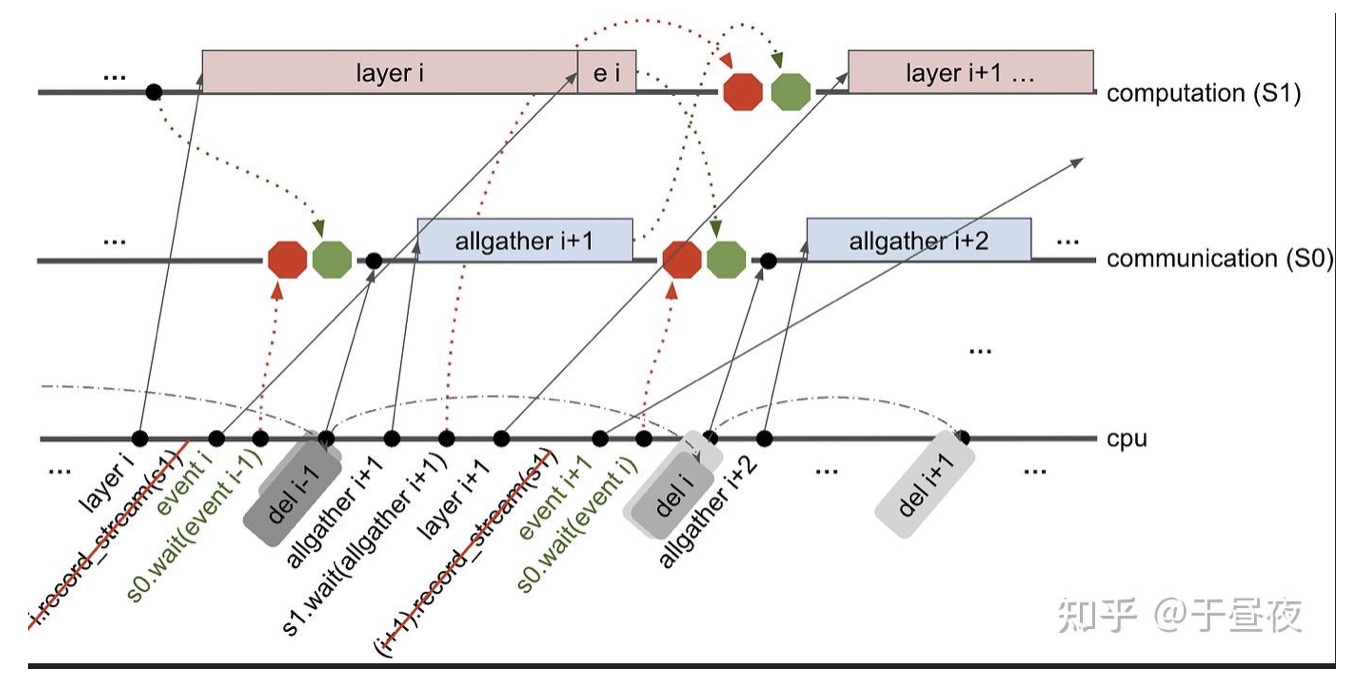
改进的点如下图所示,同步不要再发生在CPU上了,而通过在stream后插入标记来记录操作是否完成,通信流会等待依赖的计算流,而计算流也会等待依赖的通信流。理解一下这张图,以i为例,计算layer i时,预取了i+1,i+1的通信会产生一个event i,计算流会去wait这个event,直到结束后才会去进行layer i+1的计算。
现在CPU不需要再进行等待,也不会被rate_limiter阻塞,相应的阻塞被转移到了对应的流上。
Reference
https://github.com/pytorch/pytorch/issues/114299
https://dev-discuss.pytorch.org/t/fsdp-cudacachingallocator-an-outsider-newb-perspective/1486
https://docs.pytorch.org/tutorials/intermediate/FSDP_tutorial.html